Ramen in Osaka and Dotonbori
Explore Osaka ramen through area planning, menu styles and the operator details to check before joining a queue.
Ramen in Osaka: A Planning Guide for Hong Kong Visitors
Osaka has no single signature ramen style, which is exactly why planning matters: the city's ramen supply is spread between the Minami area around Namba, Dotonbori and Shinsaibashi and the Kita area around Umeda, with national chains, independent shops and late-night counters mixed together. For a Hong Kong visitor on a short trip, the practical rule is to choose the area you will already be in, check each shop's current hours on its own page, and treat the Dotonbori branches of famous chains as the slowest option, not the only one. Osaka rewards walkers who are flexible about style.
This page is for Hong Kong travellers who have two or three Osaka meals to spend and want one or two of them to be ramen without losing an afternoon to a queue. It sits under ramen travel in Japan and pairs with ramen in Tokyo if your itinerary covers both cities. It is a planning guide, not a ranking of Osaka shops.
The area rule. Decide between Minami and Kita before you decide on a shop. Both areas have enough ramen that crossing the city for one bowl is rarely worth the time, and the walk from a Namba exit to a Dotonbori counter can itself involve crowds, canal-side queues and confusing underground passages.
📍 1. Where Osaka's ramen is concentrated
Minami is the tourist-dense south, centred on Namba Station, the Dotonbori canal and the covered shopping arcades around Shinsaibashi and Sennichimae. Ramen here runs late and leans towards chains and high-turnover counters. Kita is the north, centred on Osaka and Umeda stations, where the ramen is more often tucked into station buildings, department-store floors and office-worker streets. Third-party guides describe both as workable; the difference is crowd type rather than quality.
Unlike Fukuoka and its Hakata ramen or Sapporo and its miso ramen, Osaka has no dominant local broth, so you will see tonkotsu, shoyu, shio, miso and chicken paitan side by side. Use style as your filter rather than hunting for an 'Osaka ramen'.
🍜 2. Ichiran around Dotonbori
Ichiran is the chain most Hong Kong visitors ask about, partly because it also operates in Hong Kong. A 2026 third-party visit report describes three Ichiran locations around Dotonbori, including the main building beside the canal, an annex a few minutes away inside the Sennichimae arcade, and a branch on Namba Midosuji that the report says serves chicken-broth bowls rather than pork. The same report describes weekend lunchtime waits of about an hour at both the main building and the annex, and warns that the annex queue is partly hidden indoors and on a staircase, so it looks shorter than it is.
Opening hours for the Dotonbori main building conflict between sources: one 2026 guide lists it as open 24 hours, while a 2026 visit report gives 10:00 to 22:00. Treat both as unconfirmed and check Ichiran's official store list on the day. The booth, ticket and order-sheet process is explained on Ichiran in Japan, and the Hong Kong branch comparison is on Ichiran Hong Kong.
🎟️ 3. Ordering, cash and language
Most Osaka ramen counters use a ticket vending machine at the entrance. Larger chains increasingly accept cards and IC transit payment, but small independents may be cash only, and a machine without English is common outside tourist streets. Carry yen notes in small denominations, and read how to use a ramen ticket machine before your first bowl. The handful of words that matter, such as noodle firmness and extra noodles, are collected on Japanese ramen vocabulary.
⏰ 4. Timing a bowl around the crowds
- Dotonbori is busiest from late afternoon into the night, when it doubles as a sightseeing street; a ramen counter there at 19:00 on a Saturday is a queue first and a meal second.
- Weekday lunch in Umeda follows office rhythms: expect a surge from about 12:00 and a calmer window mid-afternoon, though this is a pattern, not a guarantee.
- Many shops take last orders before the posted closing time, and some close when the day's broth sells out.
- Solo diners are often seated faster than groups because counters fill one stool at a time.
- The Hong Kong queue habits that help are the same ones on ramen queues in Hong Kong: arrive early, know your order, and have a second option within walking distance.
🥣 5. Dietary checks and salt
Osaka's ramen variety is useful for anyone avoiding pork, since chicken, seafood and occasional vegetable broths are easier to find than in a tonkotsu-dominated city, but labels are not standardised and a 'chicken' bowl can still contain pork fat, egg noodles or fish tare. Ask before buying a ticket, because machine tickets are often non-refundable. The questions to ask are on ramen allergens. If sodium is a concern, leaving most of the soup is the single most effective step; the evidence is on ramen sodium.
🧳 6. Souvenirs and the trip home
Department-store food halls and station shops in Osaka sell boxed ramen kits from well-known shops. Dried noodle and powdered soup kits are the simplest to carry, but kits that include chilled or vacuum-packed chashu, raw egg products or fresh meat fall under Hong Kong's Imported Game, Meat, Poultry and Eggs Regulations, which the Centre for Food Safety says apply even to personal luggage and carry a maximum fine of HK$50,000 and six months' imprisonment. Read ramen souvenirs from Japan before you buy anything with meat in it.
Shop details change faster than guides. The hours, branch count and queue reports on this page come from third-party sources dated 2026 and already conflict with each other. Check each shop's official page on the day you plan to visit, assume last orders are earlier than closing time, and never build a train or flight connection around a single Dotonbori counter.
❓ 7. FAQ
Does Osaka have its own ramen style? Not in the way Fukuoka or Sapporo do. Osaka offers a broad mix of styles, so choose by broth type and location rather than looking for a local speciality.
Which part of Osaka is easiest for ramen? Minami around Namba and Dotonbori has the densest supply and the longest tourist queues. Kita around Umeda is calmer outside weekday lunch. Stay in the area you are already visiting.
Is Ichiran in Dotonbori open 24 hours? Sources conflict. One 2026 guide says 24 hours; a 2026 visit report lists 10:00 to 22:00. Check Ichiran's official store page before going.
Can I pay by card at Osaka ramen shops? Many chains accept cards and IC transit payment, but smaller shops may be cash only. Carry yen.
Can I bring an Osaka ramen kit back to Hong Kong? Dried noodles and powdered soup are generally straightforward. Kits containing meat, poultry or egg products are regulated by the Centre for Food Safety and need a health certificate or prior permission. Check the current rules before buying.
best ramen Tokyo best ramen Osaka Fukuoka ramen Sapporo ramen Tokyo Ramen Street Ichiran Tokyo ramen tour Japan Cup Noodles Museum Yokohama Ramen Museum ramen souvenirs Japan
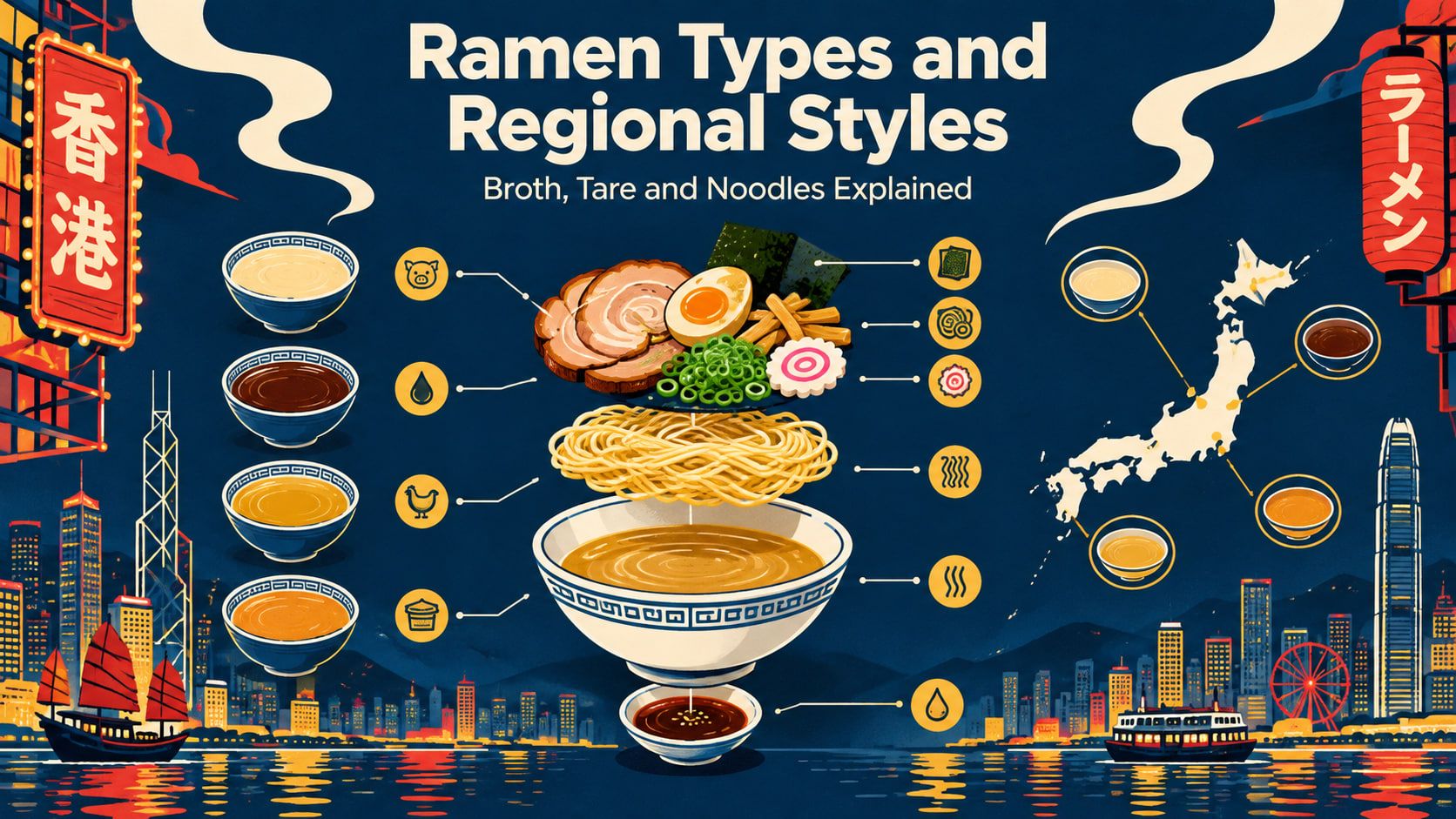
Learn to read any ramen menu confidently by understanding broth, tare, noodle texture, toppings and regional Japanese origins.

Plan a Japan ramen trip with city-specific styles, queues, museums and practical travel details.
Understand tonkotsu ramen through pork-bone broth, noodle options and the recipe details to ask about.
Explore shoyu ramen through soy-based seasoning, broth variations and the menu terms that help you choose.
Understand shio ramen through salt-based seasoning and broth choices without mistaking a clear appearance for low sodium.
Explore miso ramen through seasoning, noodle pairings and regional context before ordering or cooking it.
Understand tsukemen through its separate noodles and dipping broth, serving options and eating sequence.
Explore mazesoba through sauce, noodles and toppings, with practical guidance on mixing and ordering.
Understand abura soba through its soupless format, seasoning and the distinctions to check against mazesoba.
Explore tantanmen through sesame, chilli, recipe variations and the ingredient questions to ask before ordering.