
Is Ramen Japanese or Chinese?
Understand ramen’s Japanese identity and Chinese noodle roots without forcing its history into an either-or answer.
Is Ramen Japanese or Chinese? Origins and Modern Identity
Ramen is a Japanese dish with Chinese noodle roots. For Hong Kong diners, “Japanese in its modern identity, Chinese in its roots” is more accurate than forcing an either-or answer. Japan’s agriculture ministry describes it as Chinese noodles fused with Japanese cuisine, not a dish without outside influences.
This guide is for diners, students and readers trying to reconcile apparently conflicting descriptions of ramen. Start with common ramen questions for the wider subject. This page answers one focused question rather than repeating every detail of that guide.
The one-line answer. Distinguish where the precursor came from from where the modern dish developed.
🌏 1. Separate roots from identity
Calling ramen Japanese does not erase the Chinese contribution. Calling it Chinese without explaining its development in Japan misses the techniques, restaurant formats and regional identities that define the modern dish. For a Hong Kong reader, the useful answer recognises both stages rather than treating food history as a contest over ownership.
Japan’s Ministry of Agriculture, Forestry and Fisheries account explains that Chinese noodles fused with Japanese cuisine. Its five elements are noodles, soup stock, tare, ingredients and fat or oil. Compare this with the definition of ramen before assuming every bowl of wheat noodles is the same dish.📜 2. A useful historical sequence
The ministry account describes the opening of Japanese ports in 1859 following trade agreements in 1858, followed by the spread of Chinese noodle dishes. It records a Chinese restaurant opening in Yokohama in 1870 and Rairaiken opening in Asakusa in 1910, presenting the latter as a fusion of Chinese noodles and Japanese cuisine.
The same account links the growth of portable stalls to the aftermath of the 1923 Great Kanto Earthquake and describes renewed stall activity after the Second World War. These are useful milestones, not proof that a single person invented every aspect of ramen. The fuller chronology belongs in ramen’s historical development.
🍜 3. Why the bowl developed its own identity
Broth, seasoning and oil can vary independently. The ministry stresses the enormous number of combinations possible, rather than one national recipe. Use the components of a ramen bowl to read a menu without confusing a broth description with a seasoning name.
Regional variation is part of that identity. Explore Hakata-style ramen and Sapporo miso ramen as different branches of the wider Japanese category, not rival answers to the origin question. A regional label also does not establish a restaurant’s ingredients or current menu.
🥢 4. What this means in Hong Kong
A Hong Kong ramen menu is a more useful starting point than the nationality of the owner. Ask about noodles, broth and seasoning, especially when dietary needs matter. A Japanese-style bowl prepared in Hong Kong remains understandable as ramen; geography alone does not define whether the recipe uses pork, chicken or vegetables.
Chinese noodle dishes remain distinct categories with their own traditions. ramen versus Lanzhou lamian and ramen versus Hong Kong wonton noodles explain practical differences. Similar spellings or alkaline noodles do not justify treating their entire histories as interchangeable. For a broader cultural reading, continue to ramen culture and history.
What to check. Origin stories simplify a long exchange of ingredients and techniques. Do not turn a source’s early-shop milestone into an unsupported claim of a universally agreed first bowl.
❓ 5. FAQ
Is ramen Japanese? Yes, as a modern dish developed in Japan, with Chinese noodle roots.
Does Chinese influence make that answer wrong? No. Cultural roots and modern culinary identity describe different parts of the story.
Was Rairaiken important? The ministry account records its 1910 Asakusa opening as an important fusion of Chinese noodles and Japanese cuisine.
Is ramen identical to lamian? No. Compare the specific noodle techniques, broth and service format rather than relying on a similar name.
what is ramen what is tonkotsu ramen ramen vs ramyeon ramen Japanese or Chinese how spicy is Buldak ramen price Hong Kong ramen storage reheat ramen narutomaki kansui
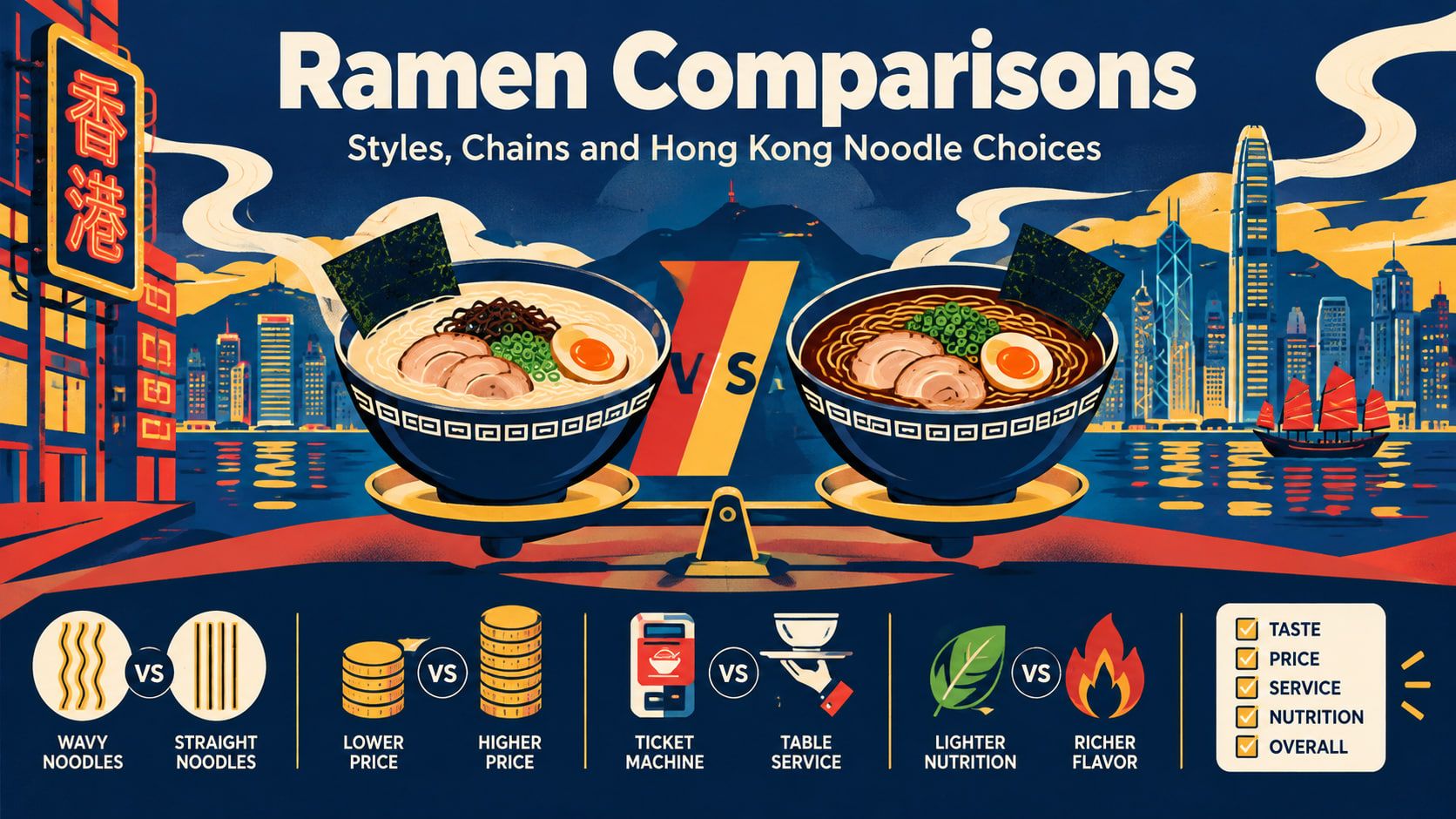
Choose with honest side-by-side trade-offs in broth, noodles, price tier, service format and nutrition—not a subjective winner.
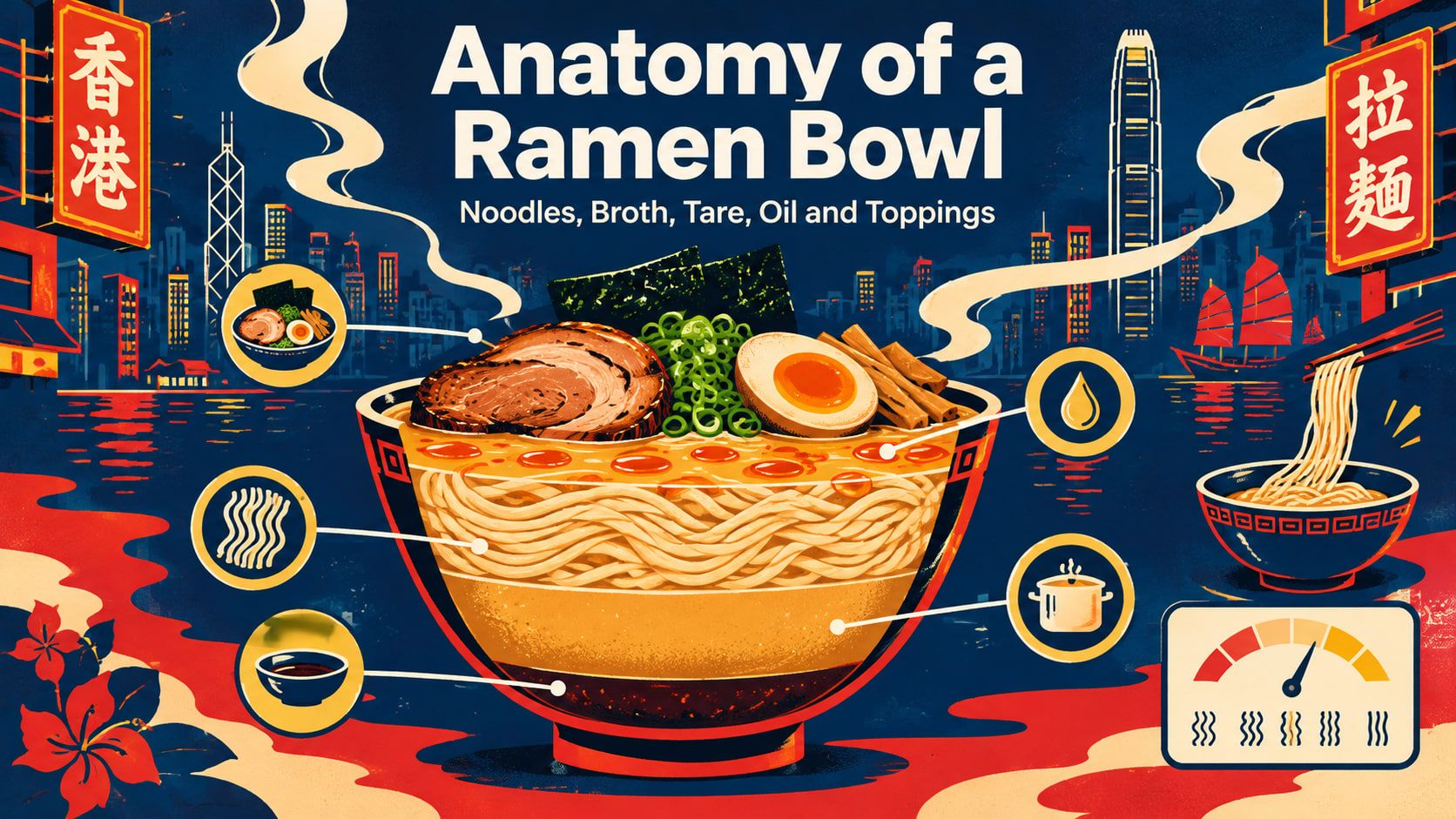
Understand the technical parts of a bowl so menu terms like chintan, paitan, kaedama and barikata become useful rather than confusing.

Follow new shops, closures, seasonal bowls and price changes through dated updates rather than stale evergreen claims.

Get the direct answer first, then follow links to the deeper guide on ingredients, culture, calories or cooking.
Compare Ichiran, Ippudo and Butao through published menus, customisation, seating and ordering logistics without a winner.
Compare ramen, udon and soba through noodle ingredients, serving formats and the dietary questions worth checking.
Compare ramen and pho through noodles, broth, toppings and eating format rather than declaring one superior.
Compare ramen and Lanzhou lamian through preparation, noodles, broth and the context behind their names.
Explore ramen and Hong Kong wonton noodles through their ingredients, serving styles and practical meal differences.
Compare ramyeon and ramen through product formats, cooking methods and what the names commonly describe.