
What Is Ramen?
Understand what ramen is through noodles, broth, seasoning, oil and toppings before exploring the fuller guides.
What Is Ramen? A Direct Answer for Hong Kong Readers
Ramen is a Japanese noodle soup built from four parts: wheat noodles made with alkaline water, a broth, a concentrated seasoning called tare that gives the bowl its salt and name, and a flavoured oil, finished with toppings such as sliced pork, a marinated egg and spring onion. The practical distinction for Hong Kong diners is that the name on the menu, shoyu, shio, miso or tonkotsu, describes either the tare or the broth, not the whole bowl, so two 'shoyu ramen' can taste completely different depending on whether the stock beneath is chicken, pork or fish. It is a Japanese dish with Chinese roots, and it is not the same thing as a packet of instant noodles.
This page is for anyone who has searched the question directly, whether a Hong Kong diner facing an unfamiliar menu, a parent explaining it to a child, or a cook starting from zero. It sits under ramen questions and points to the fuller guides under ramen types and the anatomy of a ramen bowl. It gives the short answer first and the next page to read second.
The four-part rule. Noodles, broth, tare, oil. Every ramen menu becomes readable once you know that the broth sets richness, the tare sets the flavour name and the oil sets the aroma, and that toppings are the variable part.
🍜 1. The four components
- Noodles: wheat flour, water, salt and kansui, an alkaline solution that gives ramen noodles their yellow tint, springy bite and faint aroma; thickness and waviness vary by style. See ramen noodles.
- Broth: simmered from pork bones, chicken, dried fish, kombu or vegetables; long hard boiling makes it cloudy and rich, gentle simmering keeps it clear. See ramen broth.
- Tare: a concentrated seasoning of soy sauce, salt or miso with aromatics, ladled into the bowl before the broth; it names the bowl. See ramen tare.
- Aroma oil: rendered pork fat, chicken fat, or oil infused with spring onion, garlic or chilli, floated on top for scent and heat retention. See ramen aroma oil.
🥢 2. The main styles you will see in Hong Kong
Hong Kong menus are dominated by tonkotsu, the cloudy pork-bone style explained on what is tonkotsu ramen, followed by shoyu, shio and miso. Tsukemen serves noodles and a thick dipping broth separately, and mazesoba is a soupless bowl tossed with sauce. Vegetable and chicken-based styles are growing but remain a minority. The comparisons on shoyu vs shio and tsukemen vs ramen cover the pairs people most often confuse.
🌏 3. Where ramen comes from
Ramen developed in Japan from Chinese wheat-noodle soups brought by immigrants in the late nineteenth and early twentieth centuries, and the modern regional styles, from Sapporo miso to Hakata tonkotsu, emerged in the decades after the Second World War. Instant ramen was invented in Japan in 1958 by Momofuku Ando. Whether that makes it Japanese or Chinese is a question with a clear answer, set out on is ramen Japanese or Chinese, and the longer story is on the history of ramen.
🍲 4. What ramen is not
- Not instant noodles: packets and cups are a product inspired by ramen, with fried or air-dried noodle blocks and powdered soup; see instant noodles in Hong Kong.
- Not Korean ramyeon: a related instant-noodle category with its own flavour conventions; see ramyeon vs ramen.
- Not udon or soba: different flours, no kansui, different broths; see ramen vs udon vs soba.
- Not wonton noodle soup: Hong Kong's own alkaline egg noodle in a clear dried-flounder and shrimp broth, a cousin rather than a sibling; see ramen vs wonton noodles.
🧭 5. What to read next
To order confidently, start with the ramen glossary for the menu words. To cook it in a Hong Kong flat, making ramen at home starts from a two-ring hob.
Menu labels are not standardised. Hong Kong menus use the style words loosely: 'shoyu' may describe a tare over pork broth or over chicken, 'tonkotsu' may be pork-bone stock or a pork-and-chicken blend, and 'vegetable' may still contain fish or pork fat. Ask the shop about the broth base if it matters to you for dietary or religious reasons, and treat this page as a general definition rather than a guarantee about any specific bowl.
❓ 6. FAQ
What is ramen in one sentence? A Japanese wheat-noodle soup of alkaline noodles, broth, a seasoning base called tare and aroma oil, finished with toppings.
Is ramen Japanese or Chinese? Japanese, developed from Chinese noodle soups brought by immigrants. The full answer is on the dedicated page.
Is instant noodle the same as ramen? No. Instant noodles are a packaged product inspired by ramen, invented in Japan in 1958.
What does shoyu or shio mean on a menu? They name the tare, the seasoning base: shoyu is soy sauce, shio is salt, miso is fermented soybean paste. The broth underneath may vary.
What is the most common ramen in Hong Kong? Tonkotsu, the cloudy pork-bone style, dominates Hong Kong menus, followed by shoyu, shio and miso.
what is ramen what is tonkotsu ramen ramen vs ramyeon ramen Japanese or Chinese how spicy is Buldak ramen price Hong Kong ramen storage reheat ramen narutomaki kansui
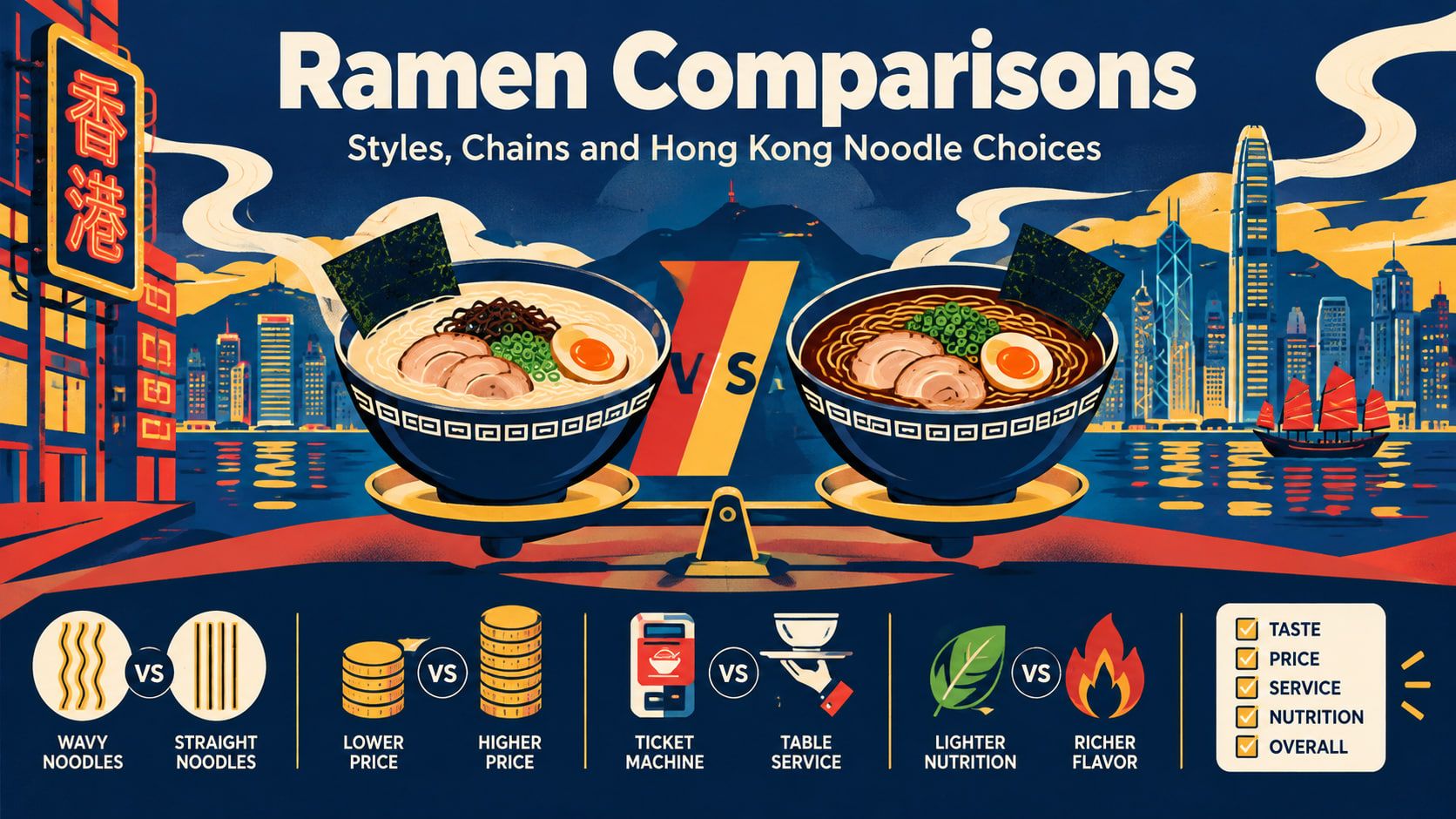
Choose with honest side-by-side trade-offs in broth, noodles, price tier, service format and nutrition—not a subjective winner.
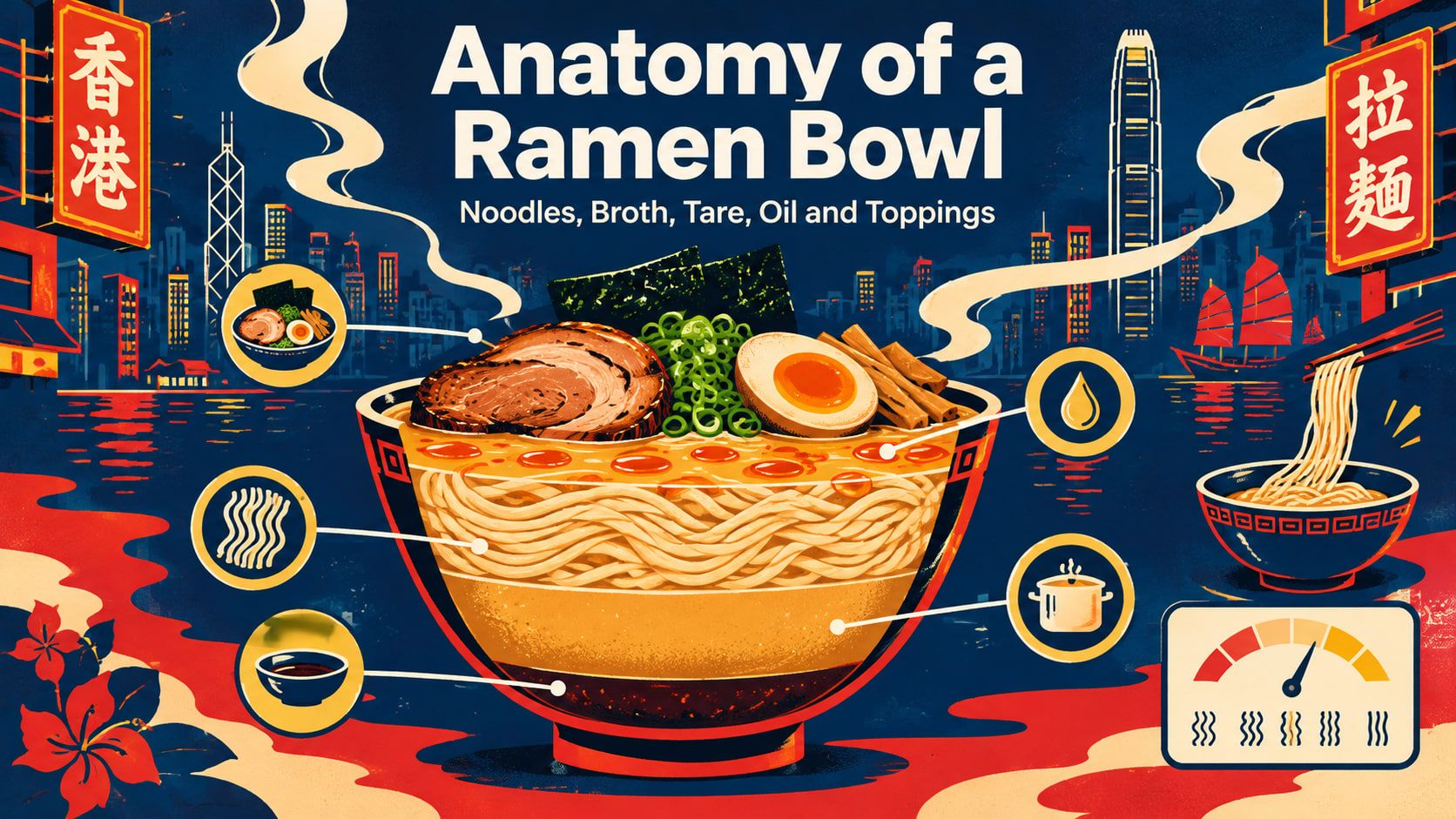
Understand the technical parts of a bowl so menu terms like chintan, paitan, kaedama and barikata become useful rather than confusing.

Follow new shops, closures, seasonal bowls and price changes through dated updates rather than stale evergreen claims.

Get the direct answer first, then follow links to the deeper guide on ingredients, culture, calories or cooking.
Compare Ichiran, Ippudo and Butao through published menus, customisation, seating and ordering logistics without a winner.
Compare ramen, udon and soba through noodle ingredients, serving formats and the dietary questions worth checking.
Compare ramen and pho through noodles, broth, toppings and eating format rather than declaring one superior.
Compare ramen and Lanzhou lamian through preparation, noodles, broth and the context behind their names.
Explore ramen and Hong Kong wonton noodles through their ingredients, serving styles and practical meal differences.
Compare ramyeon and ramen through product formats, cooking methods and what the names commonly describe.