
What Is Tonkotsu Ramen?
Get a clear introduction to tonkotsu ramen through pork-bone broth, serving conventions and ingredient questions.
What Is Tonkotsu Ramen? The Pork-Bone Style Explained
Tonkotsu ramen is the style built on a broth of pork bones boiled hard for many hours until the collagen, marrow and fat emulsify into an opaque, creamy, pale soup; the word means pork bone and describes the broth, not the seasoning, so a tonkotsu bowl can be finished with a shoyu, shio or miso tare. The practical point for Hong Kong diners is that tonkotsu is the dominant style on local menus, mostly in its Hakata form from Fukuoka with very thin straight noodles, a firmness choice and kaedama noodle refills, and that its richness comes from emulsified fat and gelatin rather than from cream or dairy. It is the heaviest of the common styles and usually among the saltiest once the soup is finished.
This page is for anyone who has searched the term directly, including diners choosing between tonkotsu and a lighter bowl, cooks wondering why their broth will not turn white, and readers checking what they are eating. It sits under ramen questions and leads to the fuller guide on tonkotsu ramen. For the general definition of the dish, start with what is ramen.
The style rule. If the soup is opaque and white to beige, coats the spoon and leaves your lips slightly sticky as it cools, it is tonkotsu or a tonkotsu blend. Clear broth, however rich-tasting, is a different style.
🍜 1. What makes the broth white
Pork femur, knuckle, trotter and head bones are boiled at a rolling boil, not simmered, for anywhere from eight hours to more than a day. The violent boiling breaks fat into tiny droplets and extracts collagen that converts to gelatin, and the gelatin holds the fat in suspension, which is what turns the liquid opaque. Gentle simmering of the same bones produces a clear stock. Many shops blend pork with chicken or add back fat for body; the technique and the reasons it fails at home are on ramen broth and the Hong Kong-flat version on the tonkotsu broth recipe.
🥢 2. The Hakata form most Hong Kong shops serve
- Very thin, straight, low-hydration noodles that cook in under a minute and are ordered by firmness, from soft to extra hard.
- Small portions designed for kaedama, an extra serving of noodles added to the remaining soup, which Ichiran's official guide describes as the Hakata way of enjoying more noodles.
- Restrained toppings: chashu, spring onion, wood-ear mushroom, often pickled ginger and sesame at the counter, sometimes a marinated egg.
- A ticket machine or order sheet, and in some chains a solo counter booth.
- The regional background is on Hakata ramen and the Fukuoka travel context on Hakata ramen in Fukuoka.
🌶️ 3. Variations you will meet
Kumamoto-style tonkotsu adds black garlic oil called mayu and slightly thicker noodles; see Kumamoto ramen and black garlic mayu. Tonkotsu-shoyu is a pork-bone broth with a soy tare, the basis of the Yokohama iekei style on iekei ramen. Spicy tonkotsu adds chilli paste or oil. Some Hong Kong menus describe a pork-and-chicken blend as tonkotsu; it is lighter and the distinction from pure chicken paitan is on tonkotsu vs chicken paitan.
🏪 4. Where Hong Kong serves it
Tonkotsu is the house style of several Fukuoka-origin chains with Hong Kong branches, including Ichiran and Ippudo, and of many local independents. The brand pages under ramen restaurants in Hong Kong record what each operator publishes, and Ichiran vs Ippudo vs Butao compares three tonkotsu operators on format rather than ranking them.
❤️ 5. Richness, calories and salt
Tonkotsu is the richest common style because of its emulsified fat and gelatin; the calorie picture, and why the figure depends on how much soup you finish, is on tonkotsu ramen calories. The soup also carries most of the sodium, so leaving it is the most effective single step; the evidence, attributed to the Hong Kong Centre for Food Safety and Consumer Council, is on ramen sodium. People managing blood pressure, kidney conditions or pregnancy should read ramen and high blood pressure and speak to a doctor or registered dietitian; this is general information, not medical advice.
🧭 6. What to read next
For the full style guide, including how shops vary and what to order first, continue to the main tonkotsu page linked above. For the vocabulary of firmness and kaedama, use Japanese ramen vocabulary. For the broader map of styles, ramen types sets tonkotsu beside shoyu, shio, miso and the soupless styles.
Clear broth is not low salt. Choosing a lighter-looking bowl instead of tonkotsu does not make it low in sodium, and a 'light' tonkotsu can still be rich in fat. Menu labels are not standardised in Hong Kong: ask what the broth is made from if pork is a dietary or religious concern, because blends and pork-fat finishes are common even on bowls not labelled tonkotsu.
❓ 7. FAQ
What does tonkotsu mean? Pork bone. It describes the broth, which is boiled hard until opaque, not the seasoning.
Is tonkotsu the same as Hakata ramen? Hakata ramen is the Fukuoka form of tonkotsu with very thin noodles and kaedama. Most Hong Kong tonkotsu follows it.
Why is tonkotsu broth white? Rolling-boil extraction emulsifies fat with gelatin from the bones. Simmering the same bones gives a clear stock.
Does tonkotsu contain milk or cream? No. The creaminess comes from emulsified pork fat and collagen.
Is tonkotsu unhealthy? It is the richest common style and the soup carries most of the salt. Leaving the soup reduces both; see the sodium and calorie pages for sourced figures.
what is ramen what is tonkotsu ramen ramen vs ramyeon ramen Japanese or Chinese how spicy is Buldak ramen price Hong Kong ramen storage reheat ramen narutomaki kansui
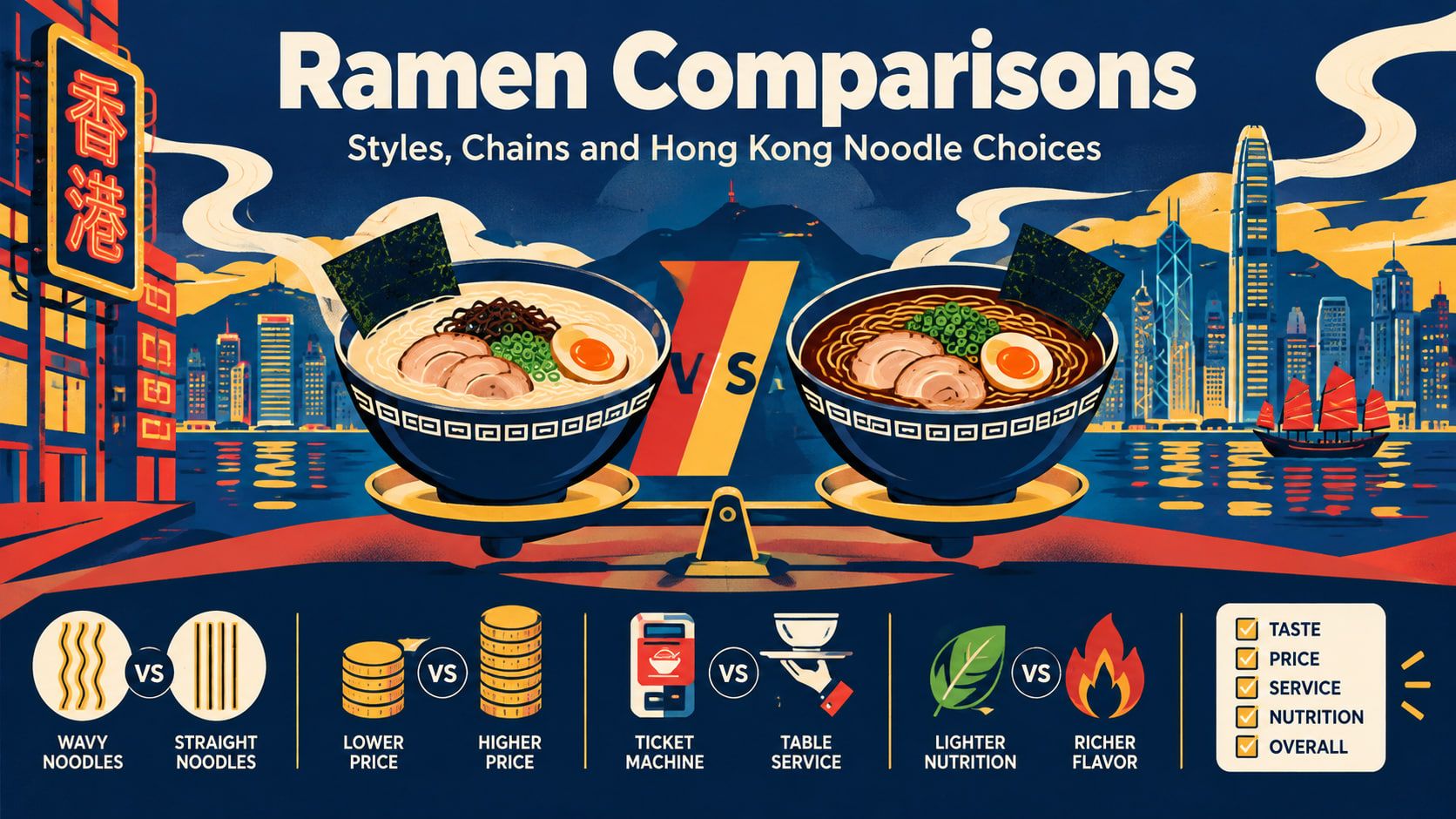
Choose with honest side-by-side trade-offs in broth, noodles, price tier, service format and nutrition—not a subjective winner.
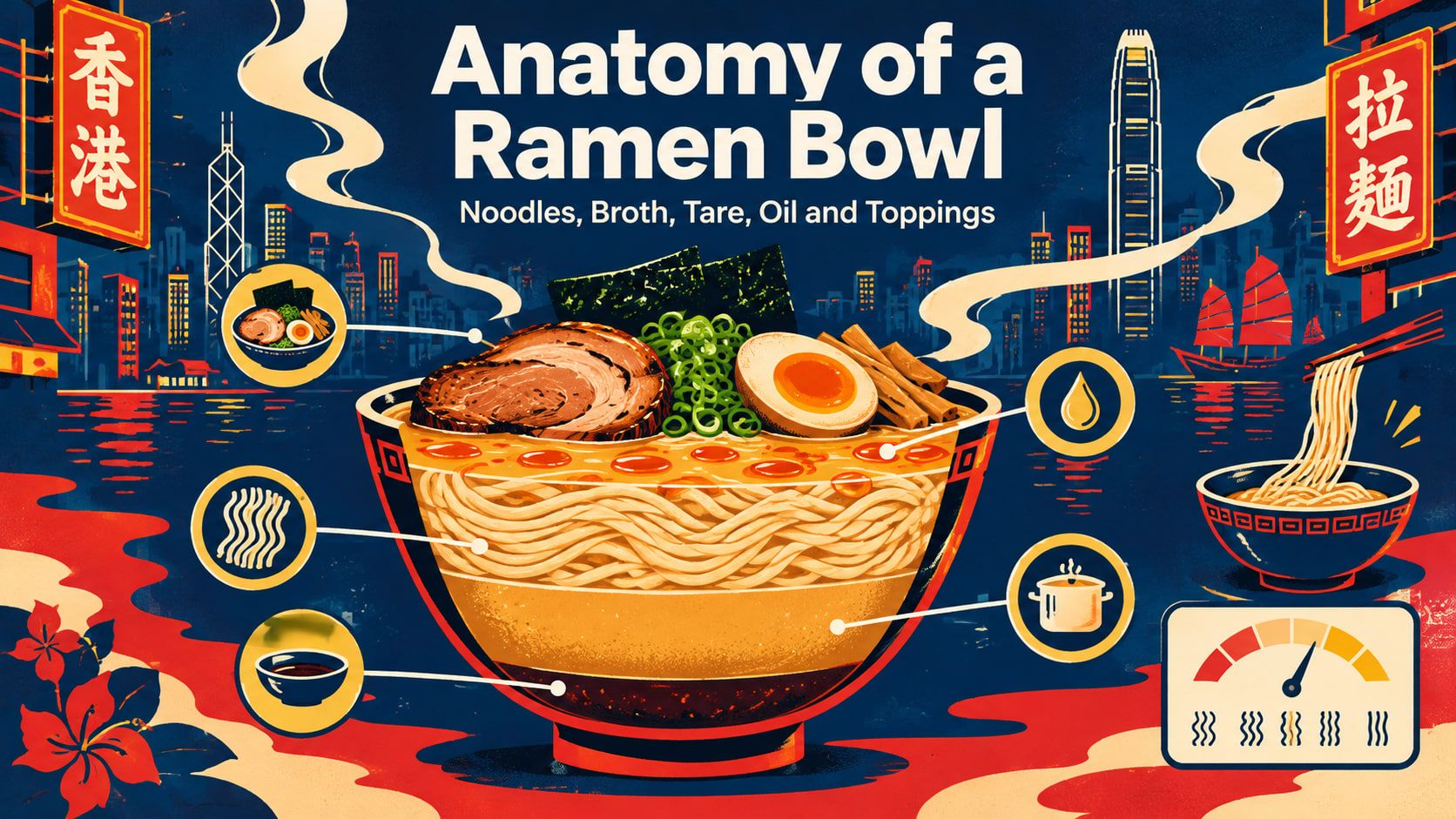
Understand the technical parts of a bowl so menu terms like chintan, paitan, kaedama and barikata become useful rather than confusing.

Follow new shops, closures, seasonal bowls and price changes through dated updates rather than stale evergreen claims.

Get the direct answer first, then follow links to the deeper guide on ingredients, culture, calories or cooking.
Compare Ichiran, Ippudo and Butao through published menus, customisation, seating and ordering logistics without a winner.
Compare ramen, udon and soba through noodle ingredients, serving formats and the dietary questions worth checking.
Compare ramen and pho through noodles, broth, toppings and eating format rather than declaring one superior.
Compare ramen and Lanzhou lamian through preparation, noodles, broth and the context behind their names.
Explore ramen and Hong Kong wonton noodles through their ingredients, serving styles and practical meal differences.
Compare ramyeon and ramen through product formats, cooking methods and what the names commonly describe.